Case study:
Accelerating market connectivity through a self-service solution
- Jun 2022–Sept 2022
- UX design
- Information architecture
- Interaction design
- Prototyping
Fidessa enables investment firms and brokers to connect with global markets, but setting up these connections was a complex manual process handled by multiple operational teams. This created long waiting times before customers could start using the service.
To address this, I explored a self-service experience that gave customers clearer guidance, more control, and a faster path to value.
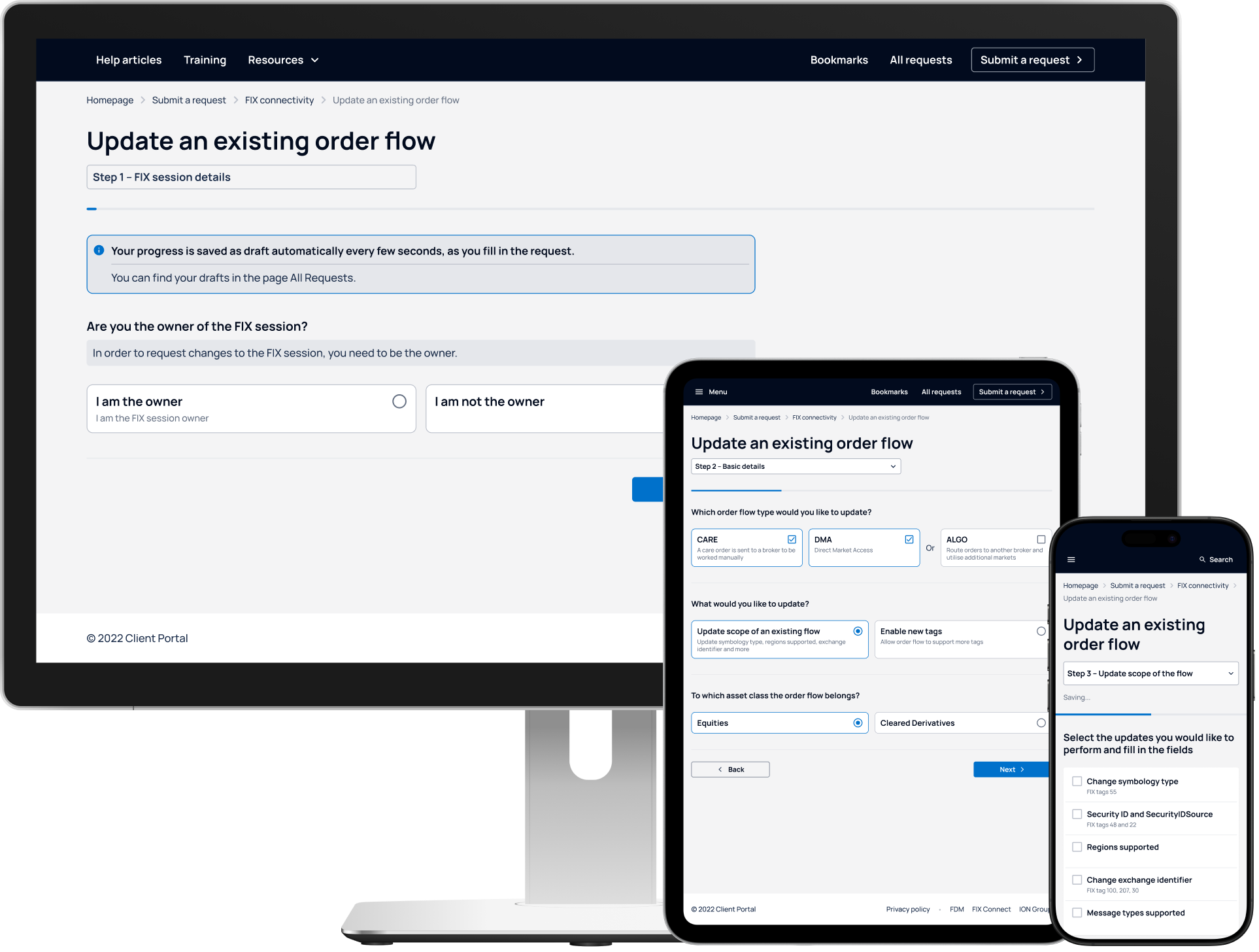
Self-service experience for faster market connectivity.
My role
As the Lead UX Designer, I was responsible for shaping the experience from problem definition to concept design, and had the autonomy to define the solution direction.
I managed stakeholder communication, led internal user research, and created wireframes and interactive prototypes to align the team and demonstrate the value of a clearer, more guided self-service experience.
I also collaborated with fellow designers, developers, and product managers to support the implementation across breakpoints and edge cases.
Discovery
Understanding the problem
Before I joined the project, clients had to choose between multiple forms to request a new connection, each tailored to a different setup. Limited guidance and technical questions made it difficult to select the right form and provide the required information, leading to abandoned requests, incomplete submissions, and follow-up conversations that extended the setup process over several weeks.
Completing the forms was also difficult. Many questions were highly technical, and clients did not always have the required information available. This often led to abandoned requests, incomplete submissions, and follow-up conversations that extended the setup process over several weeks.
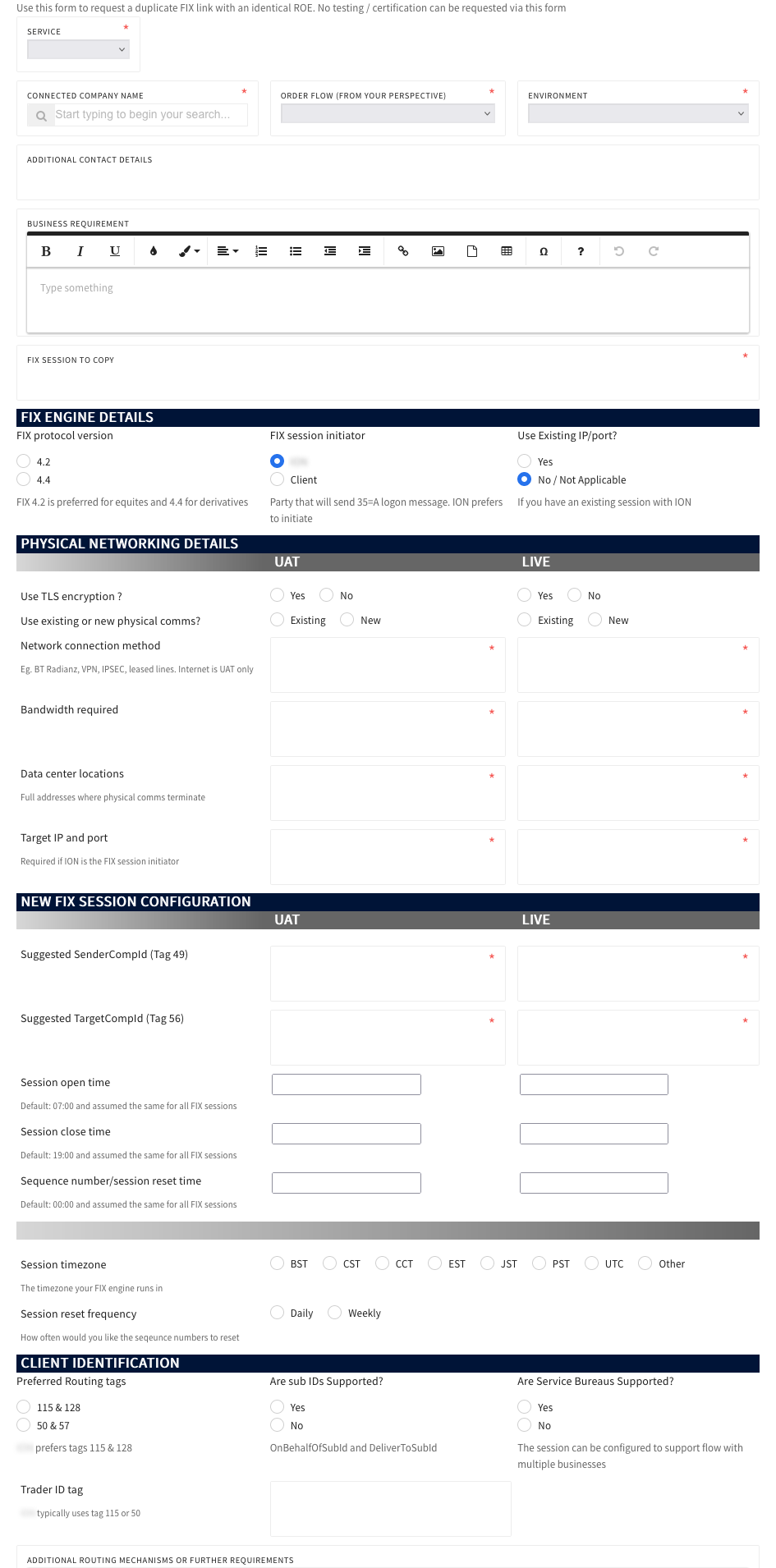
The forms were long and cumbersome.
Mapping the request requirements
I worked with subject matter experts to understand how each request type was handled, what information was required, and where customers typically needed support. We mapped mandatory fields, optional fields, and dependencies between questions to identify what was truly necessary.
This revealed opportunities to simplify the experience through progressive disclosure, showing fields only when relevant and avoiding questions that did not apply to the customer’s flow.
For unavoidable complexity, we explored the ability to save a request as a draft so customers could resume once they had gathered the missing information.
The solution
Design concept and iterations
Once the form structure was clear, I created wireframes and an interactive prototype to explore a more guided experience with clearer grouping and fewer irrelevant fields.
Self-service flow with progressive disclosure.
I reviewed the prototype with key stakeholders to validate the direction. Feedback was positive, particularly around the grouping of related information. I then used affinity mapping to identify improvements such as clearer field descriptions, tooltips, guidance on where to find required information, and refinements to the categorisation logic.
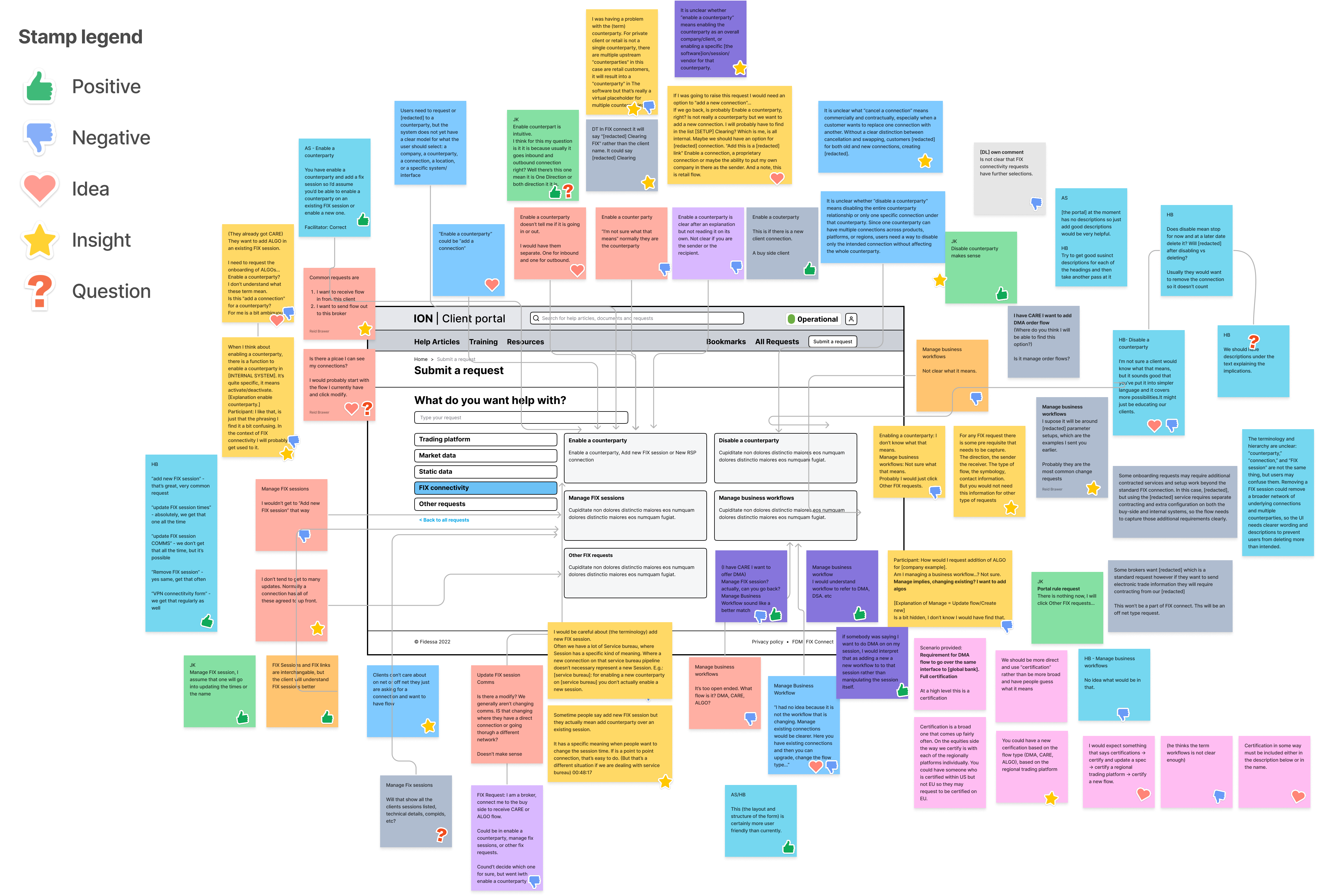
Organising stakeholder feedback into actionable themes.
Responsive design and handoff documentation
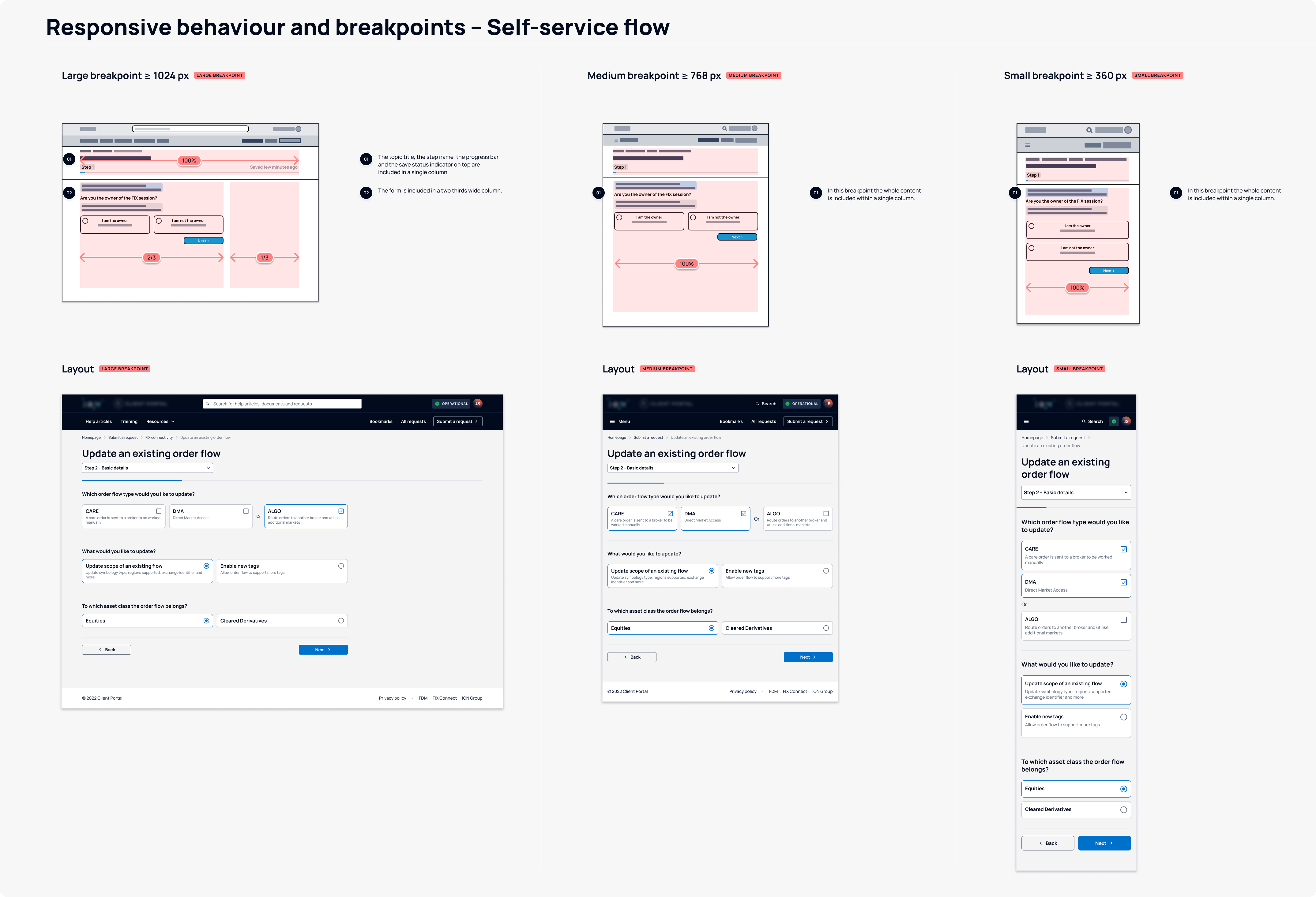
After validation, I helped translate the wireframes into high-fidelity designs across desktop, tablet, and mobile.
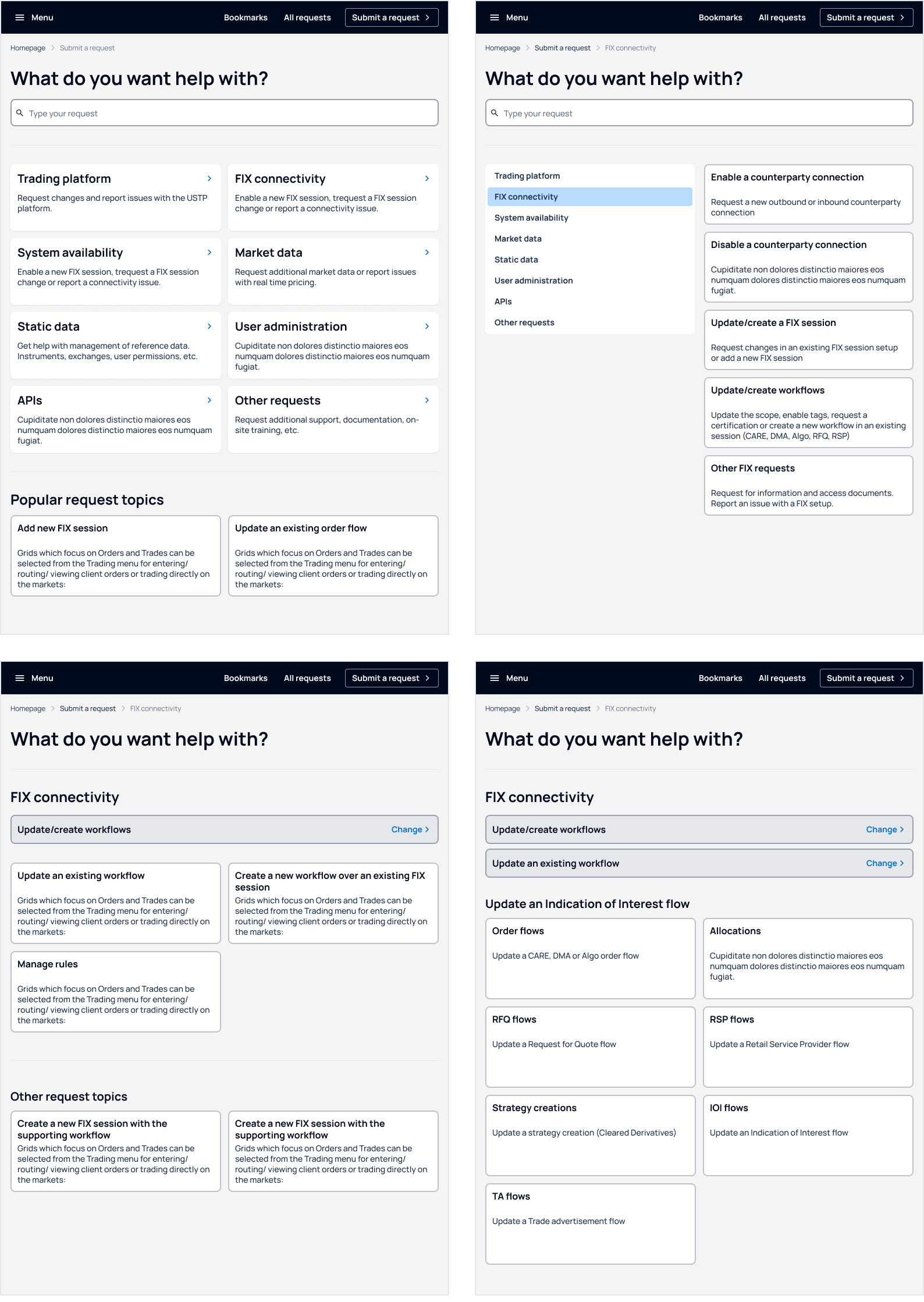
For each form, I considered the specific flow, edge cases, and responsive behaviour. I documented the designs thoroughly so developers could understand each scenario and implement the solution with less friction.
Outcome
The redesign transformed a collection of complex request forms into a guided self-service workflow that helped customers navigate connectivity requests more independently. Through progressive disclosure, contextual guidance, and draft-saving capabilities, the solution reduced unnecessary complexity while creating a scalable foundation for future self-service experiences.
The project successfully aligned stakeholders around a simpler request model and established a clearer path for customers to complete connectivity requests with less operational support.