Case study:
Turning a desktop fintech solution into an intuitive mobile app
- Feb 2024–Jun 2024
- UX Architect
- Prototyping
- Design System
Fidessa has long been a cornerstone in the Fintech industry, offering a comprehensive platform that allows users to manage the entire order and trade lifecycle from a powerful desktop application.
For years, customers have requested an alternative lightweight solution that enables traders to access critical workflows on the go. In response, I designed and led the development of a mobile application that brought efficiency and simplicity to complex trading workflows.
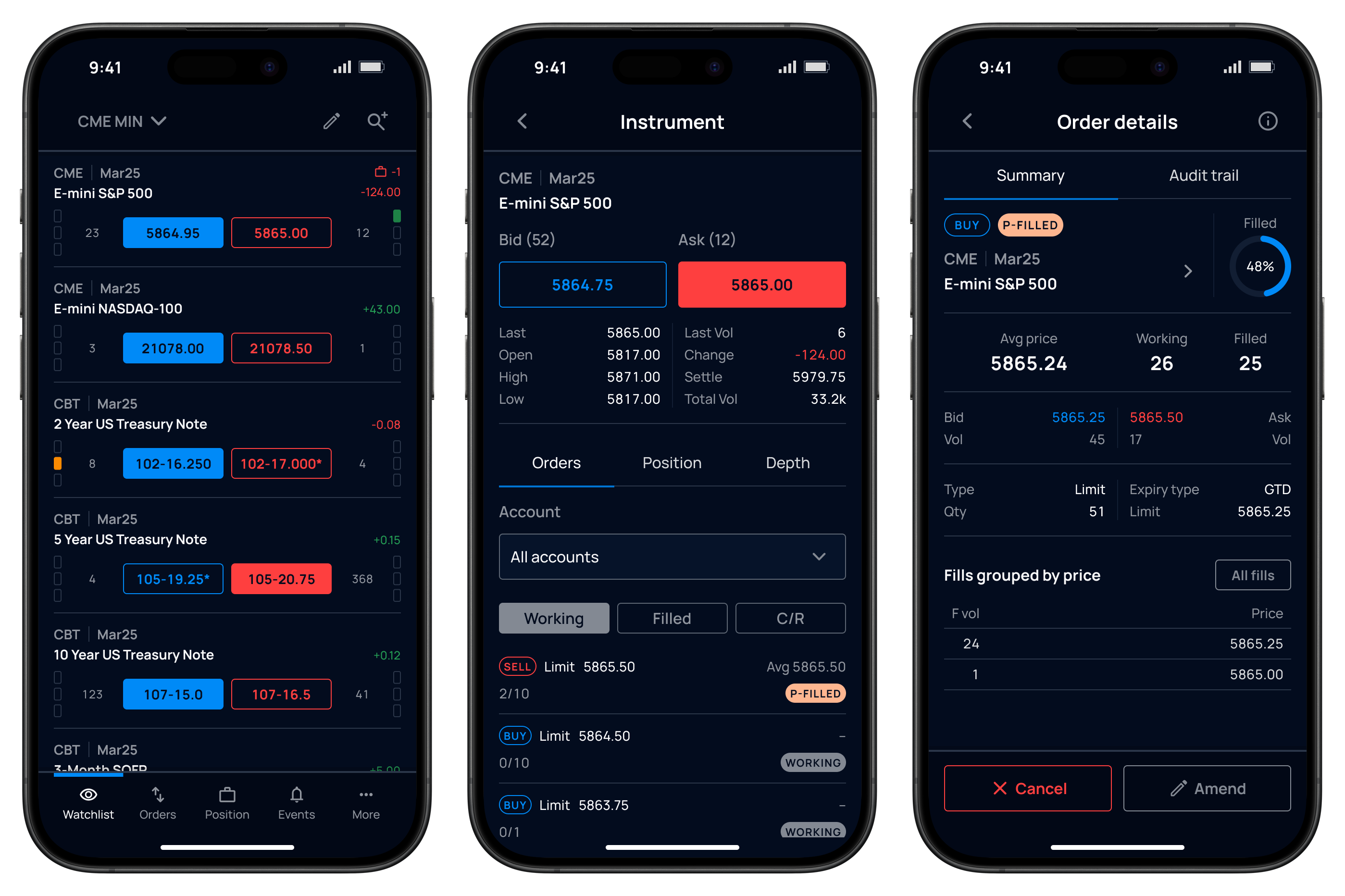
Hi-fidelity screens of the fintech mobile app.
My role
As Lead User Experience Architect, I helped shape the product vision, prioritized features with the Product Manager, designed and validated key workflows through prototyping and user testing, and collaborated with engineering teams to bring the product to market. I also partnered with the Design System team and other product teams to establish mobile patterns and ensure consistency across the product portfolio.
Objectives
The objective was to bring the most critical trading workflows from a complex desktop platform to mobile, enabling traders to manage orders and monitor markets from anywhere.
The project also helped define reusable mobile patterns for the company’s design system, creating alignment with other mobile products across the portfolio.
Approach
Prioritization and collaboration
The desktop application was a large Windows-based trading platform with dozens of screens and functions supporting the full trading lifecycle. The challenge was not simply to make it smaller, but to identify which workflows were essential in a mobile context.
I started by auditing the desktop application with subject matter experts to understand the workflows, screens, and data points traders relied on most. Together with the Product Manager, I prioritized the highest-value trading workflows and helped define a roadmap for the first release.
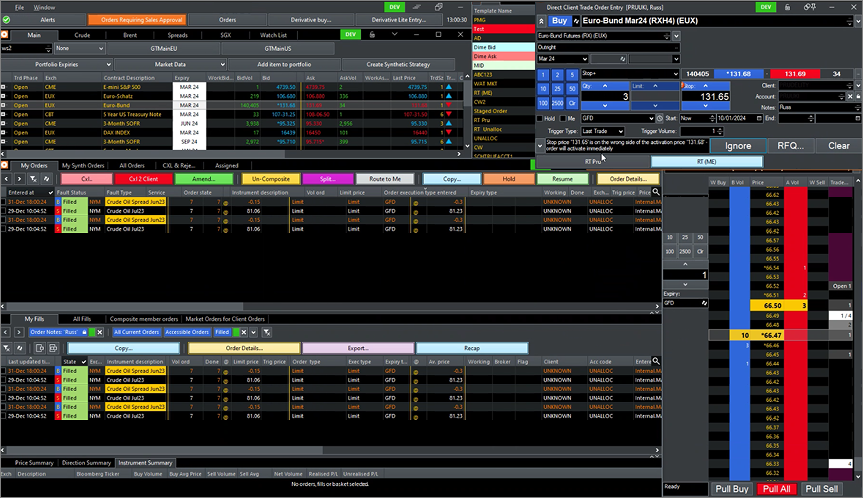
Existing desktop platform used to inform the mobile product strategy.
Establishing mobile patterns
The company’s design system was primarily built around desktop products and lacked established mobile patterns. As part of this project, I worked with the Design System team to define mobile navigation, layout, and interaction patterns that could be reused across future mobile applications.
Navigation and transitions prototype.
Iterative design
High-fidelity prototypes were used to validate whether the mobile experience could present dense trading information without feeling cramped or difficult to navigate.
Across two client feedback sessions with eight participants in total, we tested key workflows and gathered feedback on information density, navigation, and clarity. The response was positive: users felt the interface remained clean and easy to read, despite the amount of information shown.
"It was a very nice experience, (…) even though screens are filled up with information they are very clean, easy to read and navigate."
— Cleared derivative trading.
The sessions also revealed opportunities to improve some screens. Users expected to see additional market information in specific places, so I iterated on the design to surface more relevant details while preserving readability. These sessions helped validate that the product was moving in the right direction ahead of launch.
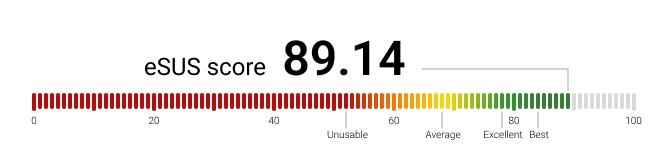
Overall, participants rated the prototype 89.14 out of 100 on the Enterprise System Usability Scale (eSUS), significantly above the industry midpoint, validating that the application successfully balanced information density with ease of use.
Designing for recoverability
The application relied on multiple backend services, some of which could become temporarily unavailable or return incomplete data. Rather than exposing technical errors to users, I designed patterns that clearly communicated what had happened, what information was affected, and what actions users could take next.
The goal was to make failures understandable and recoverable, helping users maintain confidence in the platform even when parts of the system were unavailable.
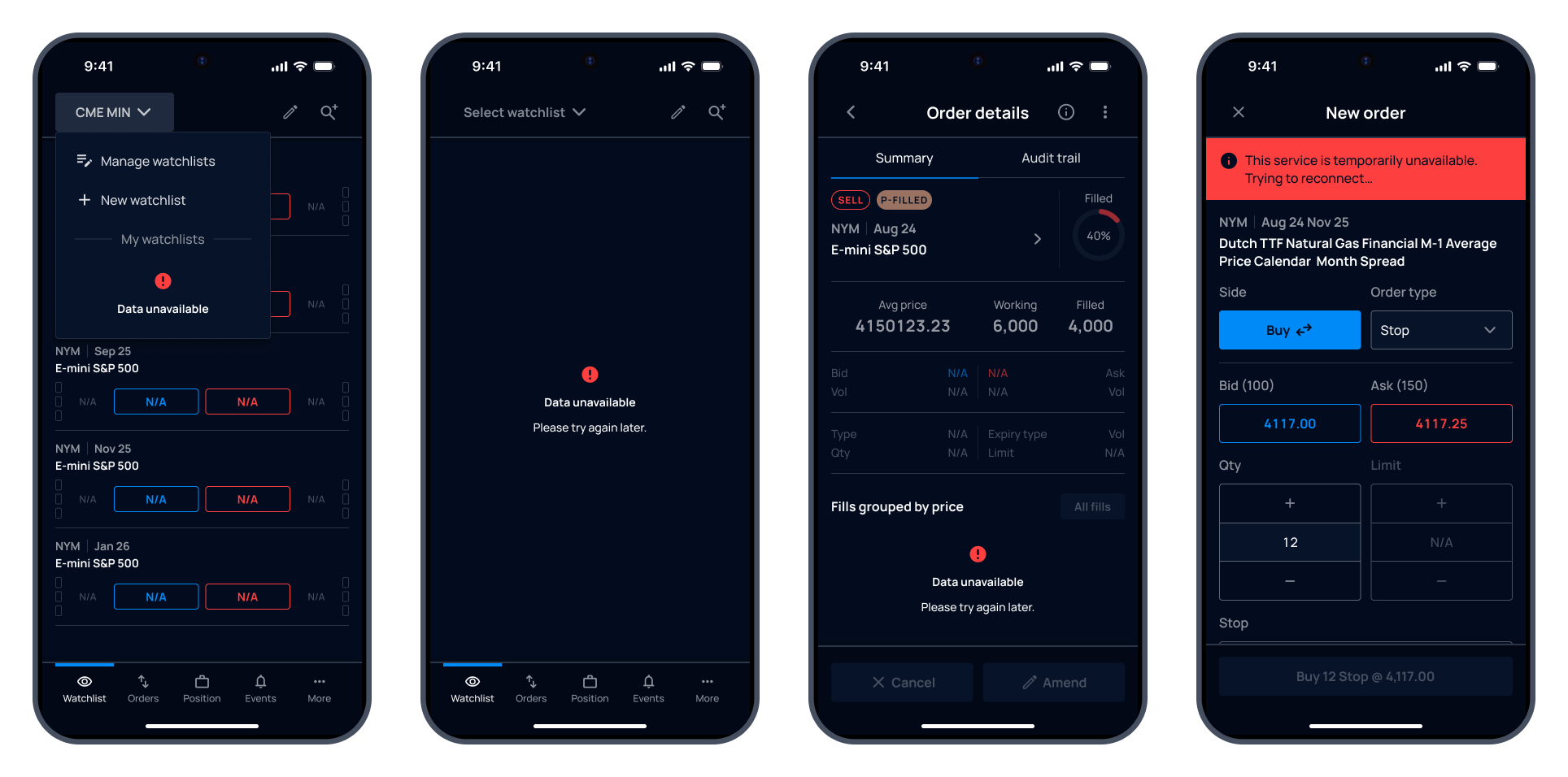
Error information and recovery.
Outcomes
I successfully designed and led the implementation of a mobile trading solution that brings an intuitive and engaging user experience for traders who need to access critical workflows on the go. Built on web technologies, this cost-effective solution enhances efficiency and simplicity for customers, enabling them to access over 200 global trading markets, 600 brokers, and connectivity worldwide with 6,500 buy-side accounts.
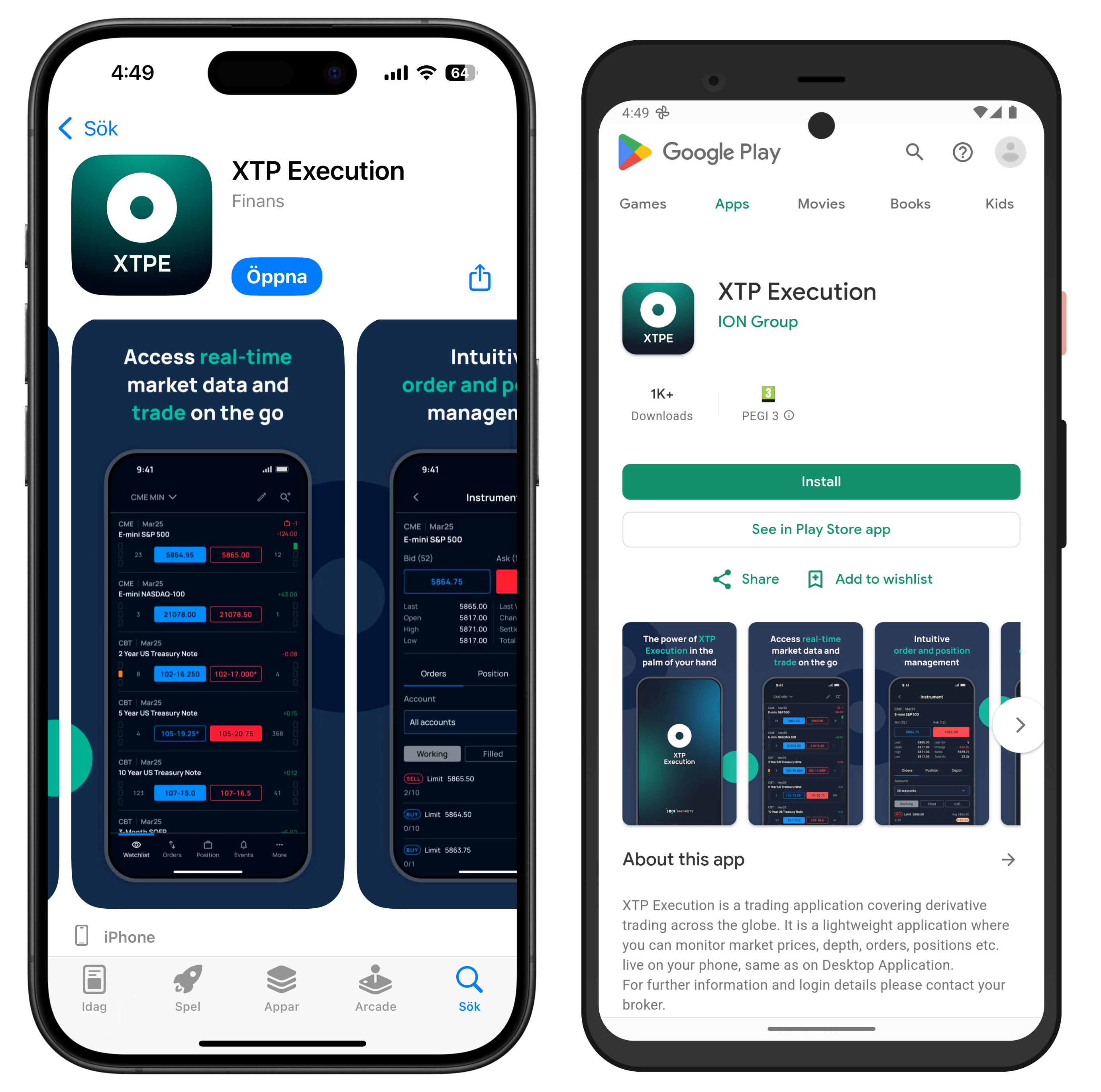
Releasing a Cleared Derivatives mobile application on the market also gave the company a competitive edge, attracting new clients who value innovation and require mobile access to global trading markets.