Case study:
Defining a strategic vision for a complex enterprise platform
- Mar 2023–Aug 2023
- UX Architect
- User Research
- Prototyping
LookOut is a leading trade surveillance platform trusted by financial institutions for regulatory compliance. Although customers valued its capabilities, management recognised that the product felt visually outdated compared with newer competitors.
What began as a visual redesign quickly evolved into something much broader. Through user research, we discovered that the biggest opportunities were not only aesthetic but structural: complex workflows, difficult navigation, and poor discoverability were slowing users down.
To unlock the platform's full potential, we developed a strategic concept that combined UX improvements with a refined visual direction to reimagine how the product could better support users.
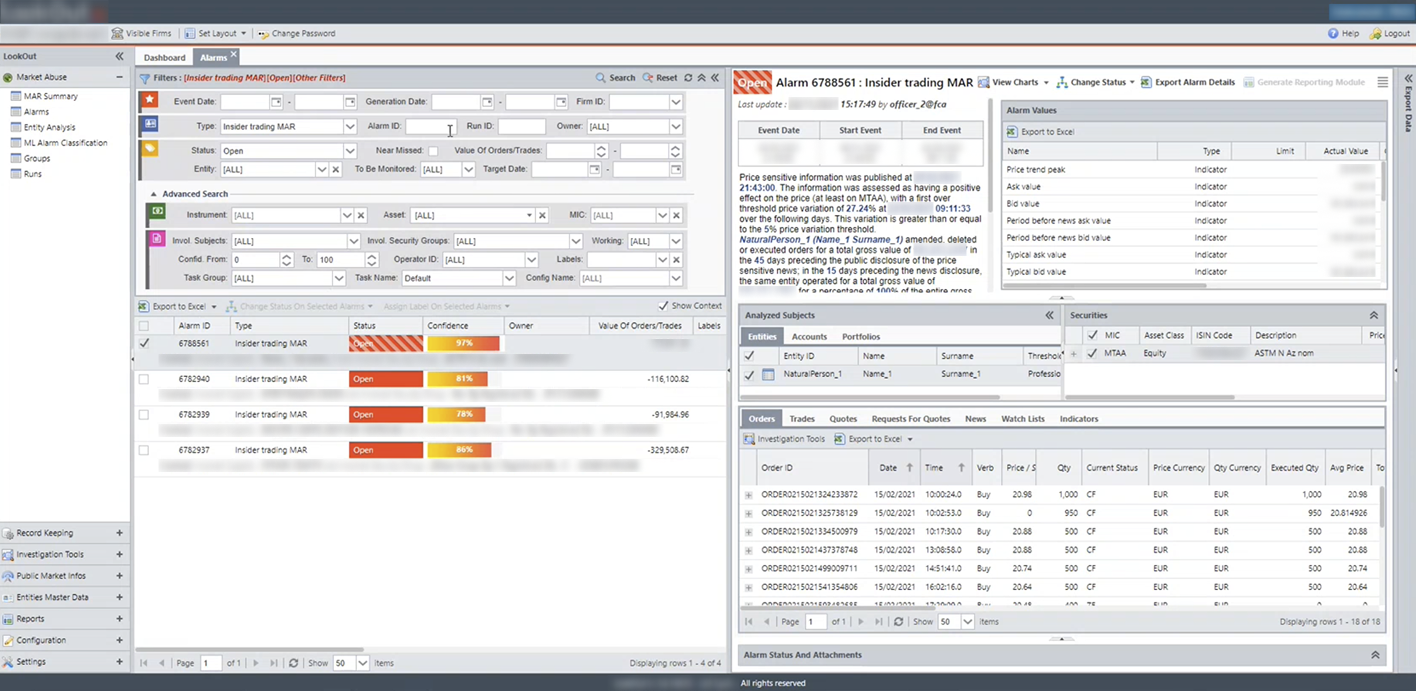
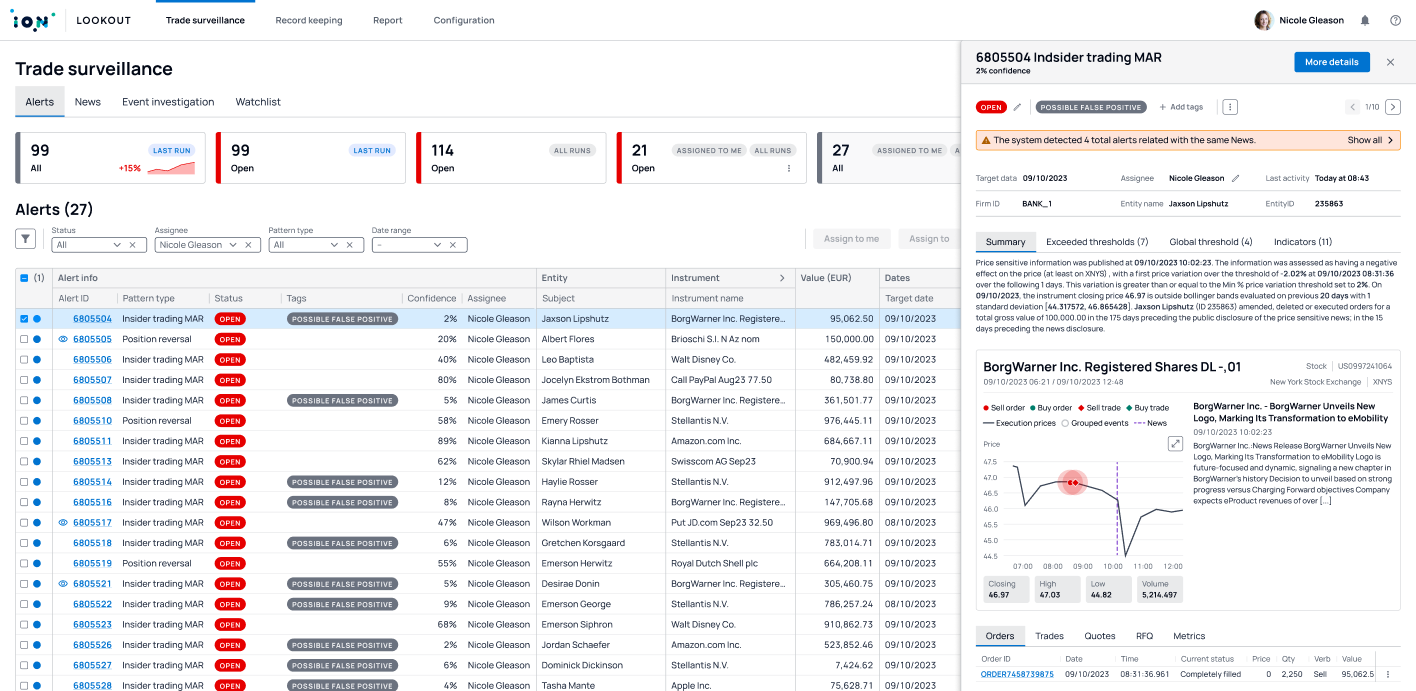
Application before and after the redesign
My role
I was one of the two User Experiece Architects working on this project. Together with my fellow designer, we conducted user research studies, translated research insight into design concepts, and developed the concept through detailed wireframes. Working closely with a Visual Designer, we shaped the visual direction to improve clarity and usability.
To bring the concept to life, I created realistic click-through prototypes in Figma, enabling stakeholders to experience the proposed workflows and supporting usability testing.
Prototype showcasing an early chart concept.
Discovery
Through interviews with 12 compliance professionals, stakeholder workshops, and competitive analysis, we discovered that users' frustrations extended well beyond the interface. Navigation, information architecture, and workflow design made routine investigation unnecessarily complex, limiting the product's usability despite its strong functional capabilities.
These insights changed the direction of the project. Rather than focusing solely on visual improvements, we used concept design to define a future product vision that addressed both functional and user experience challenges.
Solution mapping and concept design
Research insights highlighted the workflows that had the greatest impact on users. For example, compliance officers needed to analyse hundreds of alerts for potential market abuse, yet a cluttered interface and poor information hierarchy made this process unnecessarily time-consuming. Advanced functionality was also difficult to discover.
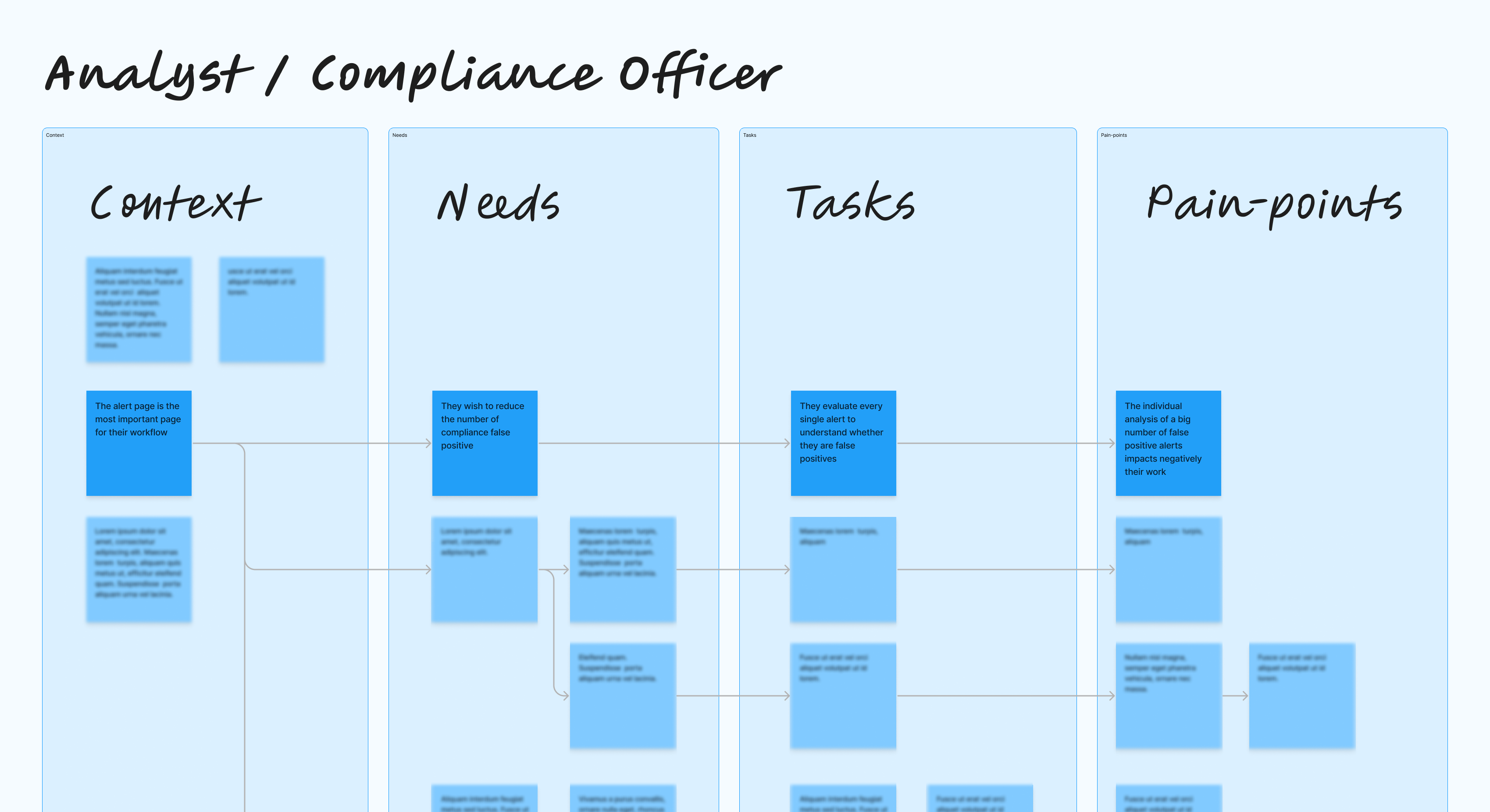
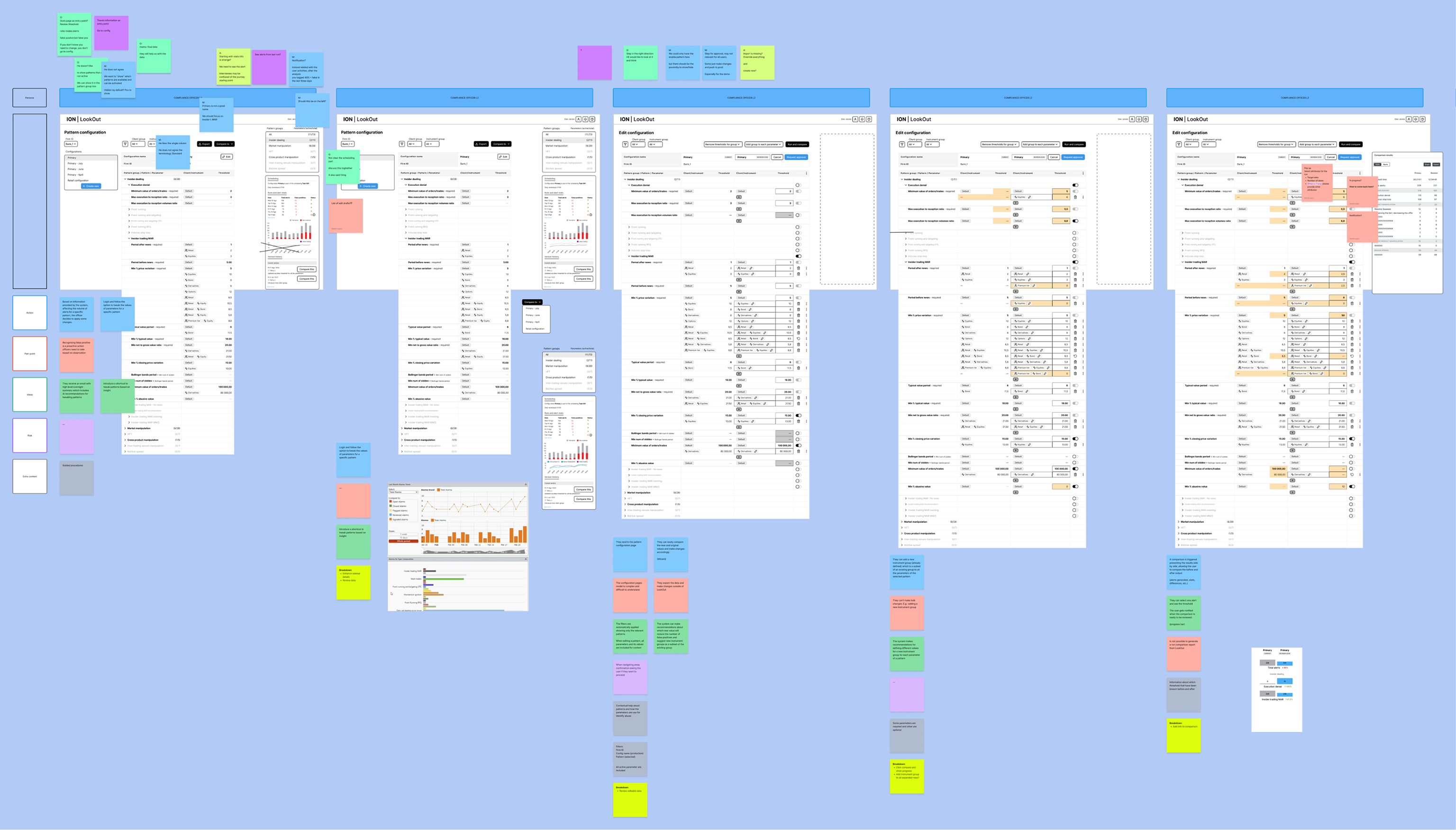
Guided by these insights, we restructured key workflows and explored new interaction patterns through a strategic concept design. Iterative prototyping and usability testing helped validate the direction while shaping a long-term vision for the platform.
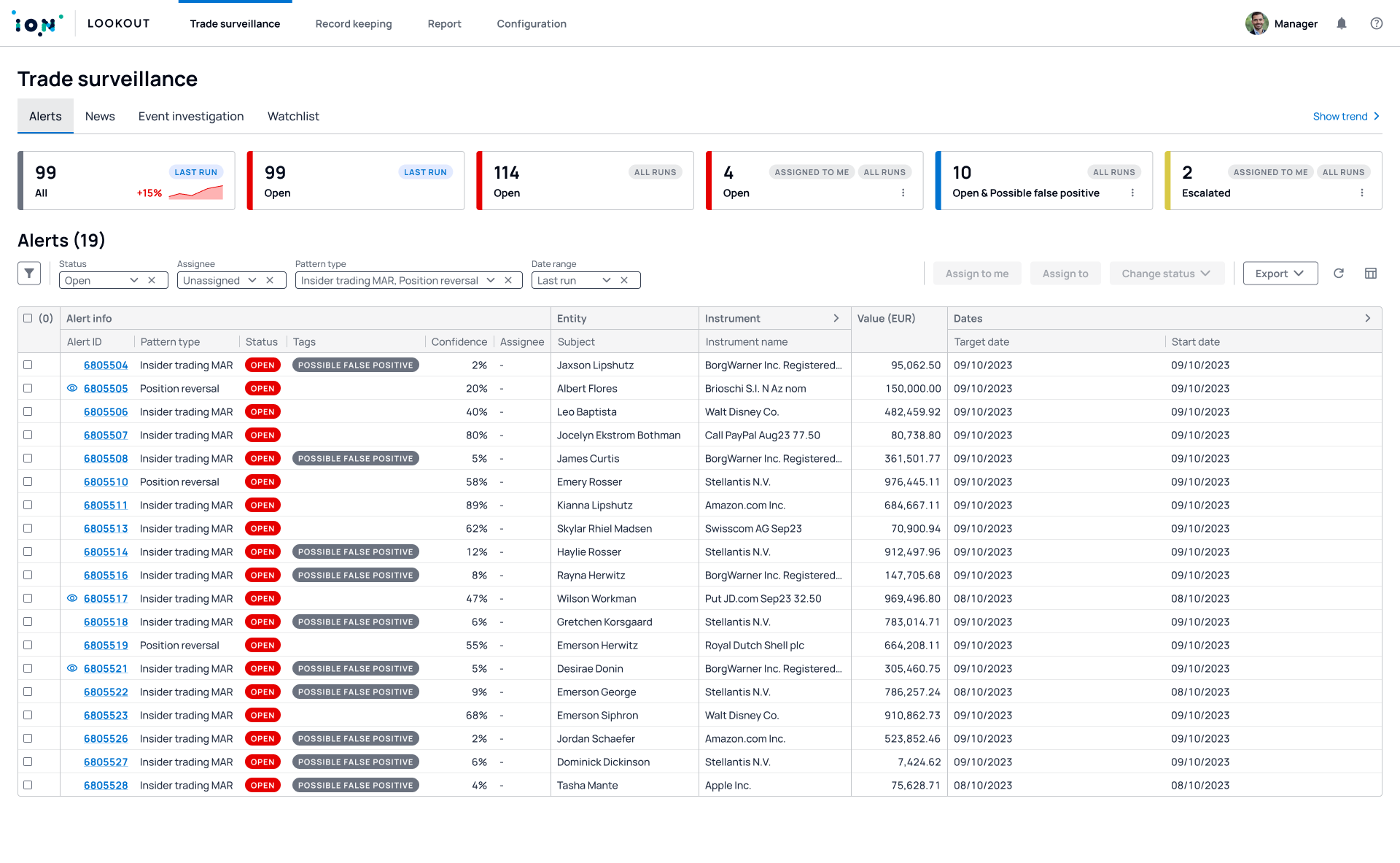
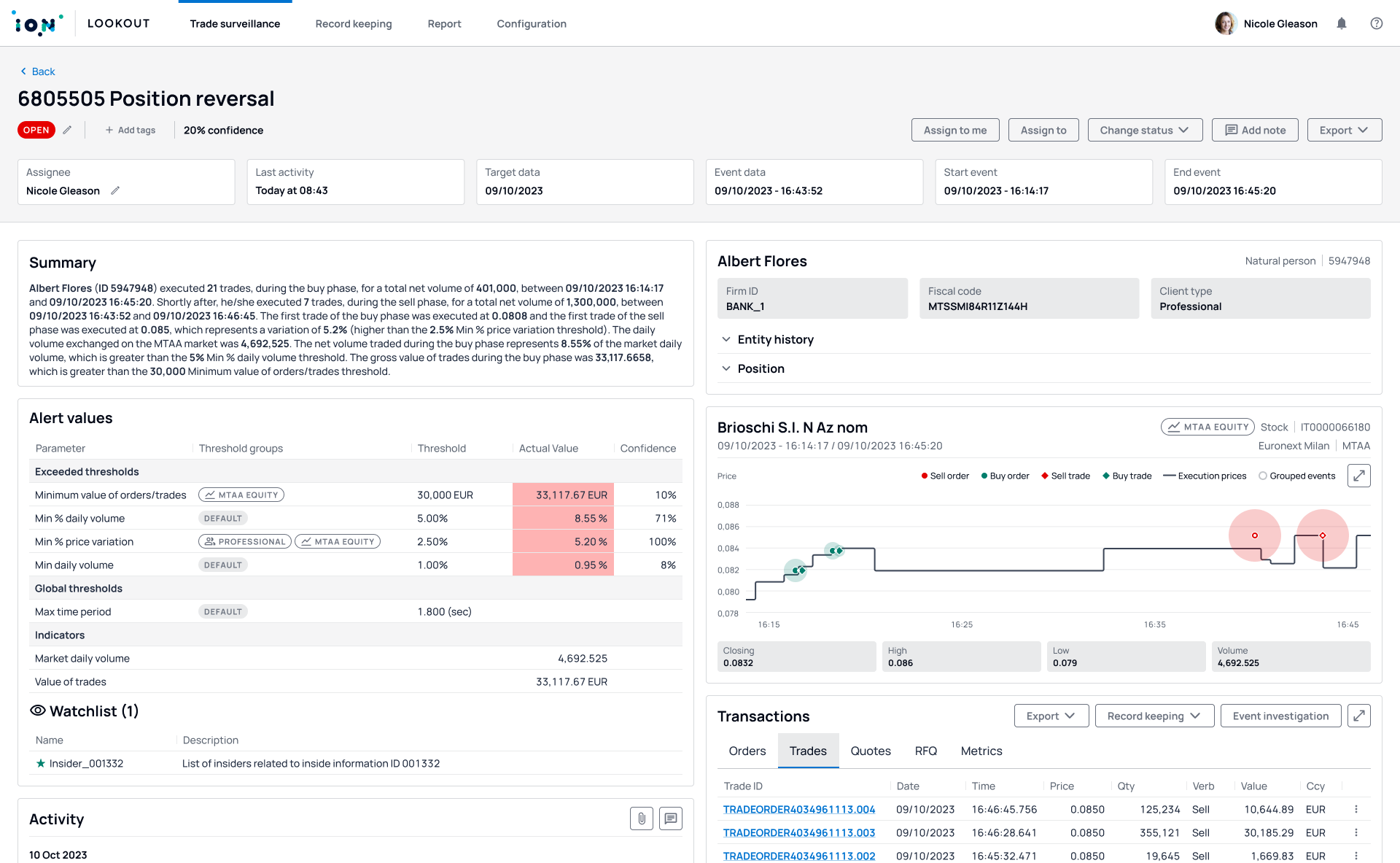
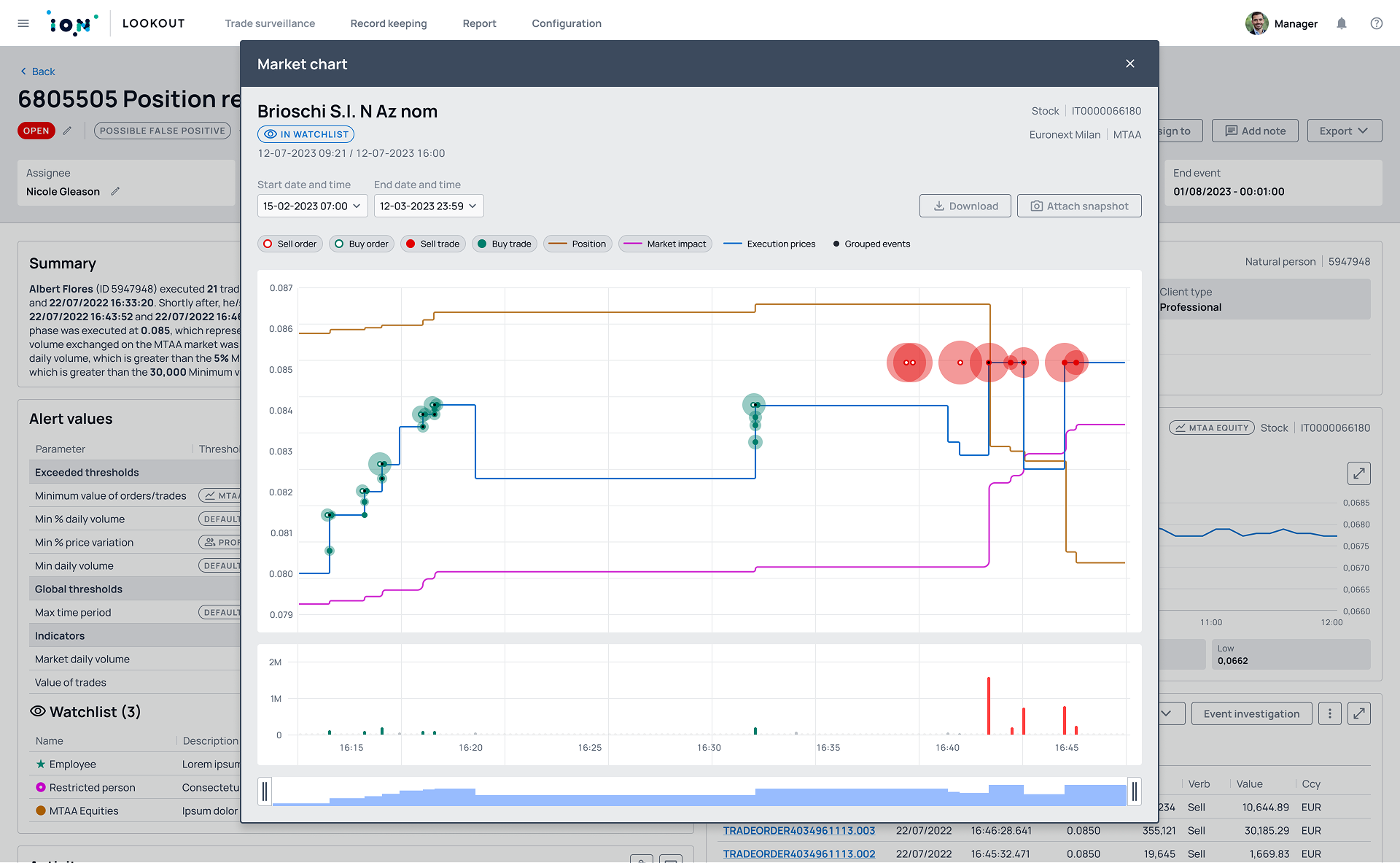
Hi-fidelity concept design with refined look and feel.
Outcome
The concept established a long-term direction for the platform by demonstrating how improved workflows, information architecture, and visual design could work together to create a more effective user experience.
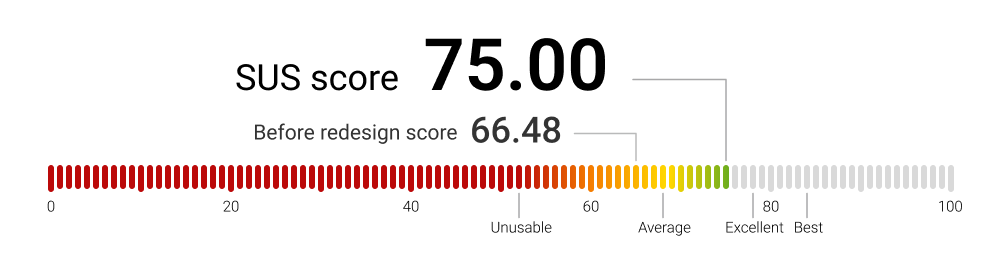
User research and usability testing provided qualitative insights and measurable usability benchmarks to inform product decisions. In testing with 27 participants, the concept achieved a SUS score of 75 out of 100, indicating above-average perceived usability and exceeding both the initial score of 66.48 and the redesign target of 70.
Beyond the design itself, the project helped stakeholders recognise the strategic value of user-centred design, strengthening confidence in the value of early discovery and encouraging closer collaboration with UX in future initiatives.