Case study:
Improving operational efficiency through a support portal redesign
- Nov 2021–Apr 2022
- UX Architect
- Wireframing
- Prototyping
Fidessa, a provider of financial trading systems, had developed a support portal to help customers find solutions to their problems. However, many customers still relied on other support channels instead of using the portal, limiting self-service adoption and creating additional work for support teams.
The goal was to redesign the support portal experience to increase self-service adoption, improve usability, and help customers resolve issues more efficiently.
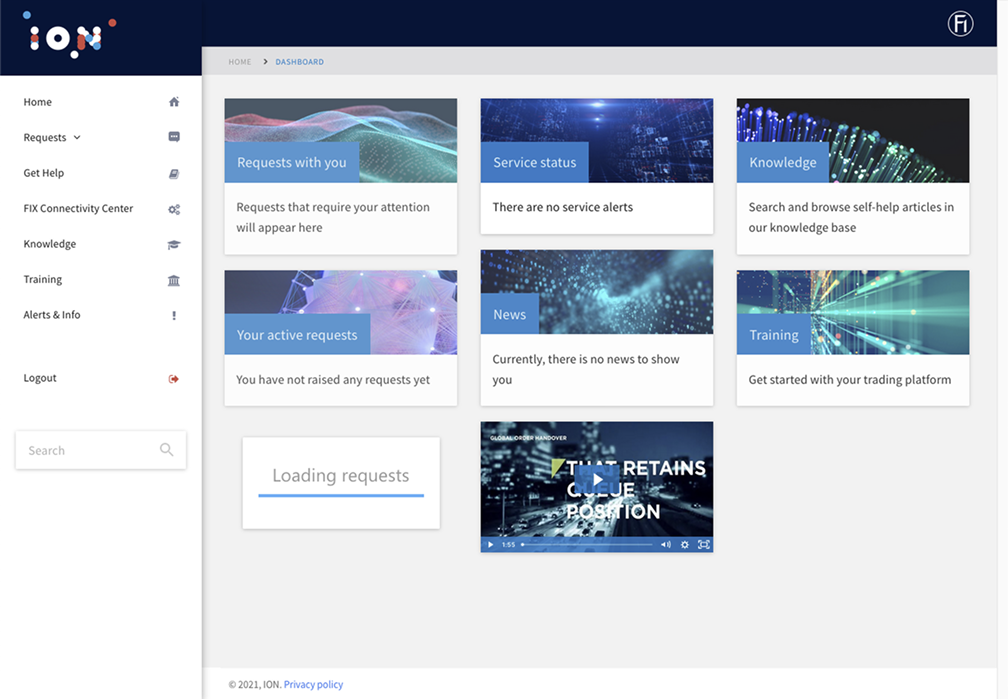
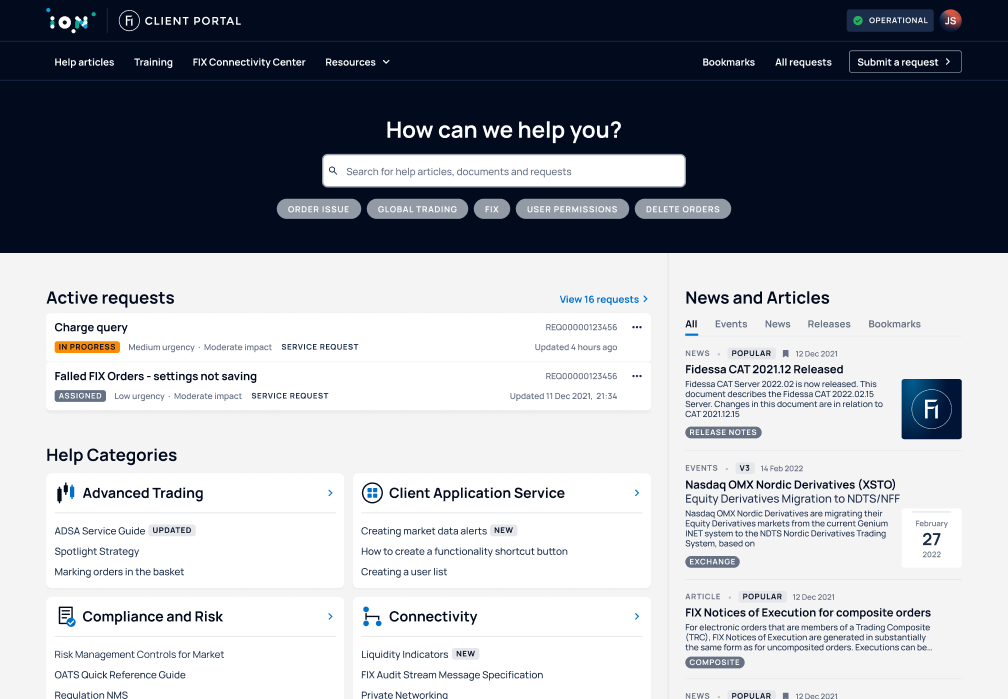
Support portal website before and after the redesign.
My role
As the Lead User Experience Architect on this project, I was responsible for translating research insights into information architecture, wireframes, prototypes, and implementation-ready design specifications.
Working closely with Product Management, Engineering, and Visual Design, I also helped shape the portal’s visual direction by reviewing design explorations and selecting the options that best supported clarity, usability, and customer expectations.
Discovery phase
Understanding the problem
One of the primary business goals for the portal was to enable customers to self-serve and find solutions to common problems.
To understand why adoption remained low, I first spoke with support teams across multiple regions. These conversations revealed a consistent pattern: customers often avoided the portal entirely and preferred other support channels instead.
This behaviour created two major challenges:
- Customers struggled to find answers independently.
- Support teams received incomplete requests, increasing resolution times.
Before proposing solutions, I wanted to understand why customers were avoiding the portal and what prevented them from using it more effectively.
User research
Despite pressure to move straight into UI changes, I secured stakeholder support for user research and conducted 10 customer interviews.
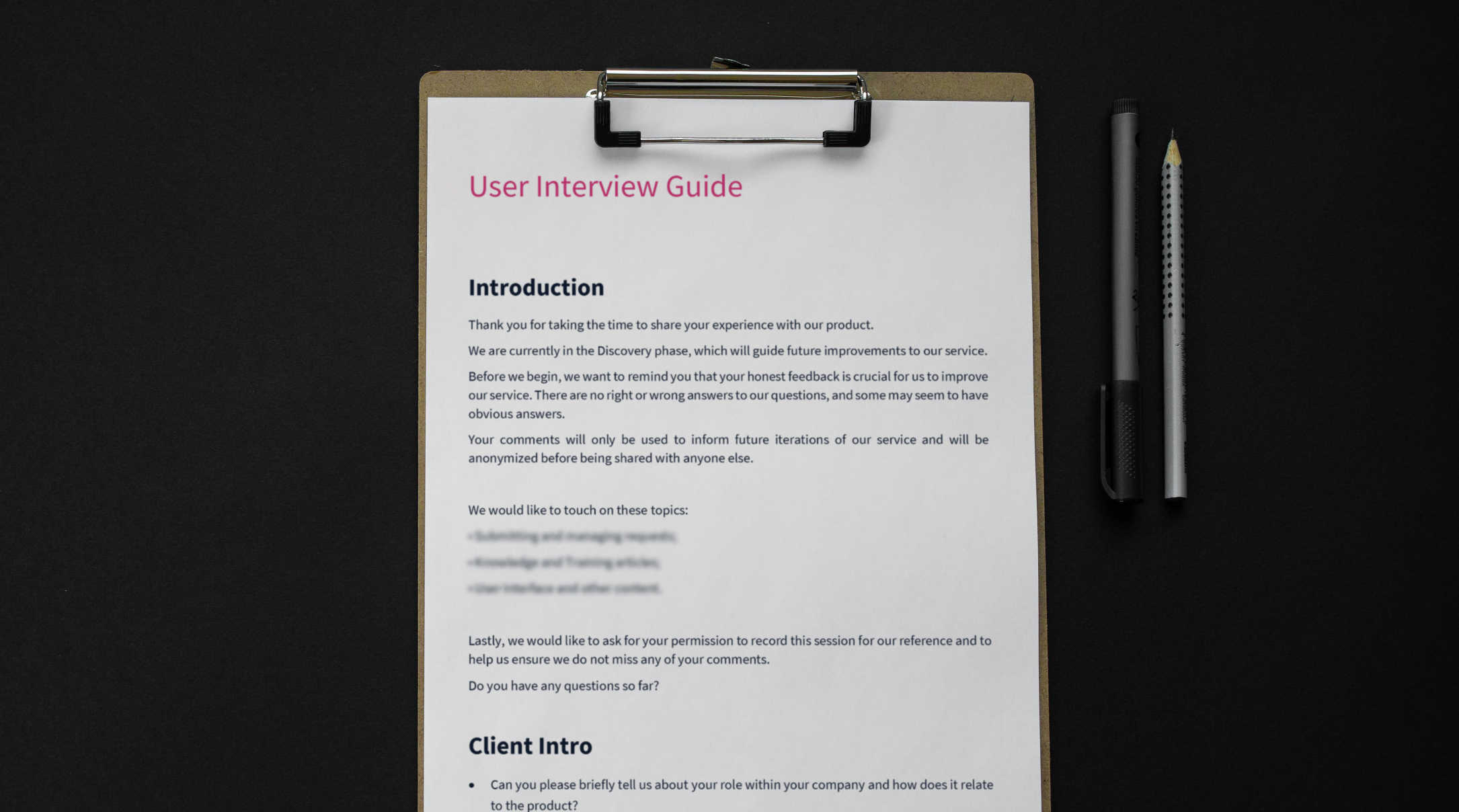
Interview guide used to structure 10 customer interviews.
Key findings
The research uncovered several recurring themes:
- Confusing navigation made the portal difficult to use.
- Poor information architecture made content difficult to find.
- Email was perceived as faster and more reliable.
- Low confidence in search results reduced self-service adoption.
The core challenge, therefore, was to make the portal as intuitive, efficient, and reliable as email while providing the additional benefits of self-service support.
Designing the solution
These findings revealed that the problem was not visual design alone. Customers struggled to find information and lacked confidence in the portal’s structure and search experience.
To address these challenges, the redesign focused on improving discoverability, simplifying support workflows, and creating a more intuitive self-service experience.
Improved information architecture
Content was reorganised around customer goals and tasks rather than internal organisational structures, making information easier to find and navigate.
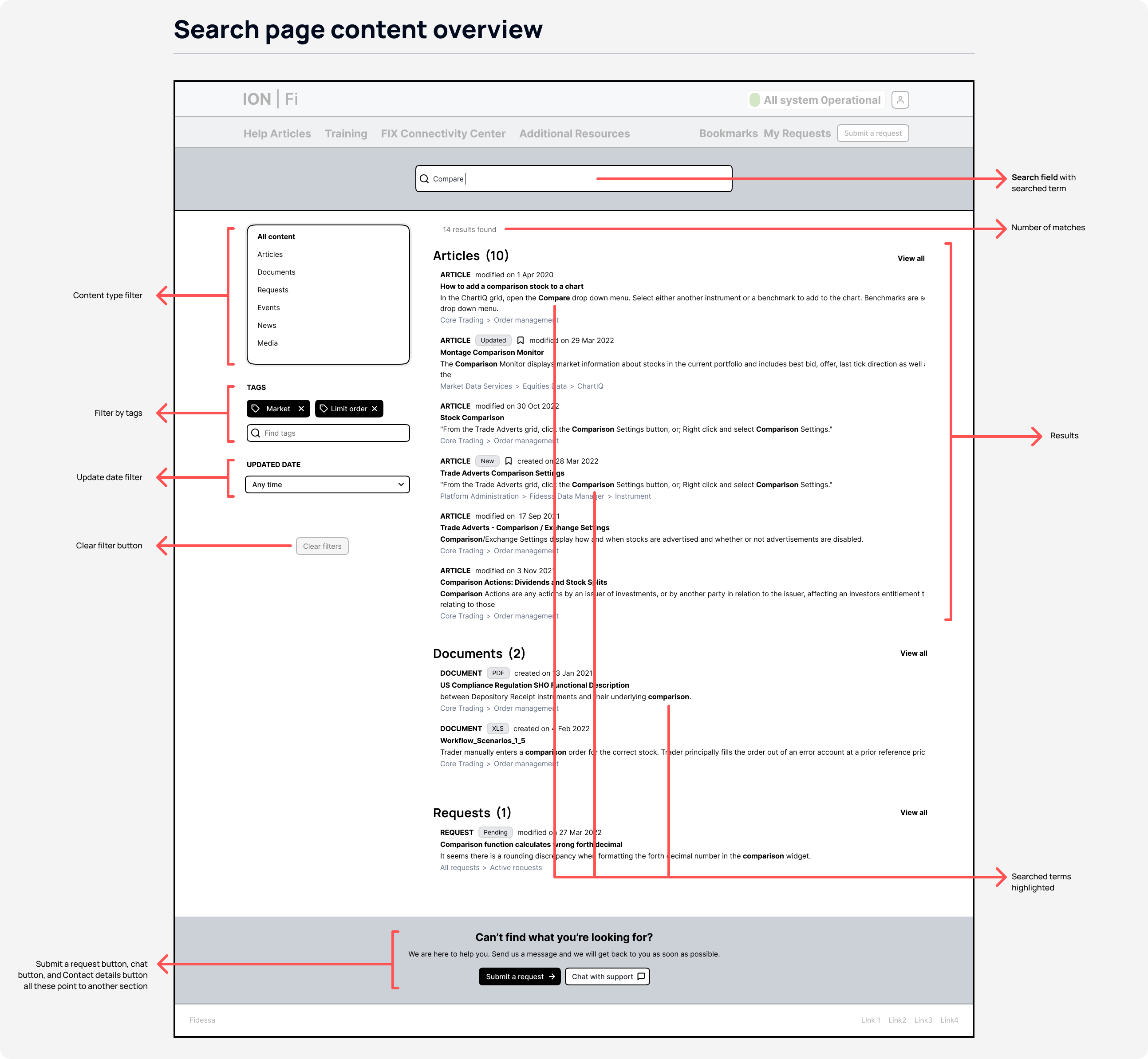
Search page with improved information architecture.
Enhanced discoverability
Search and support resources became more prominent, helping users locate relevant content and answers more quickly.
Responsive experience
The portal was redesigned to work across desktop, tablet, and mobile devices, making support accessible wherever customers needed it.
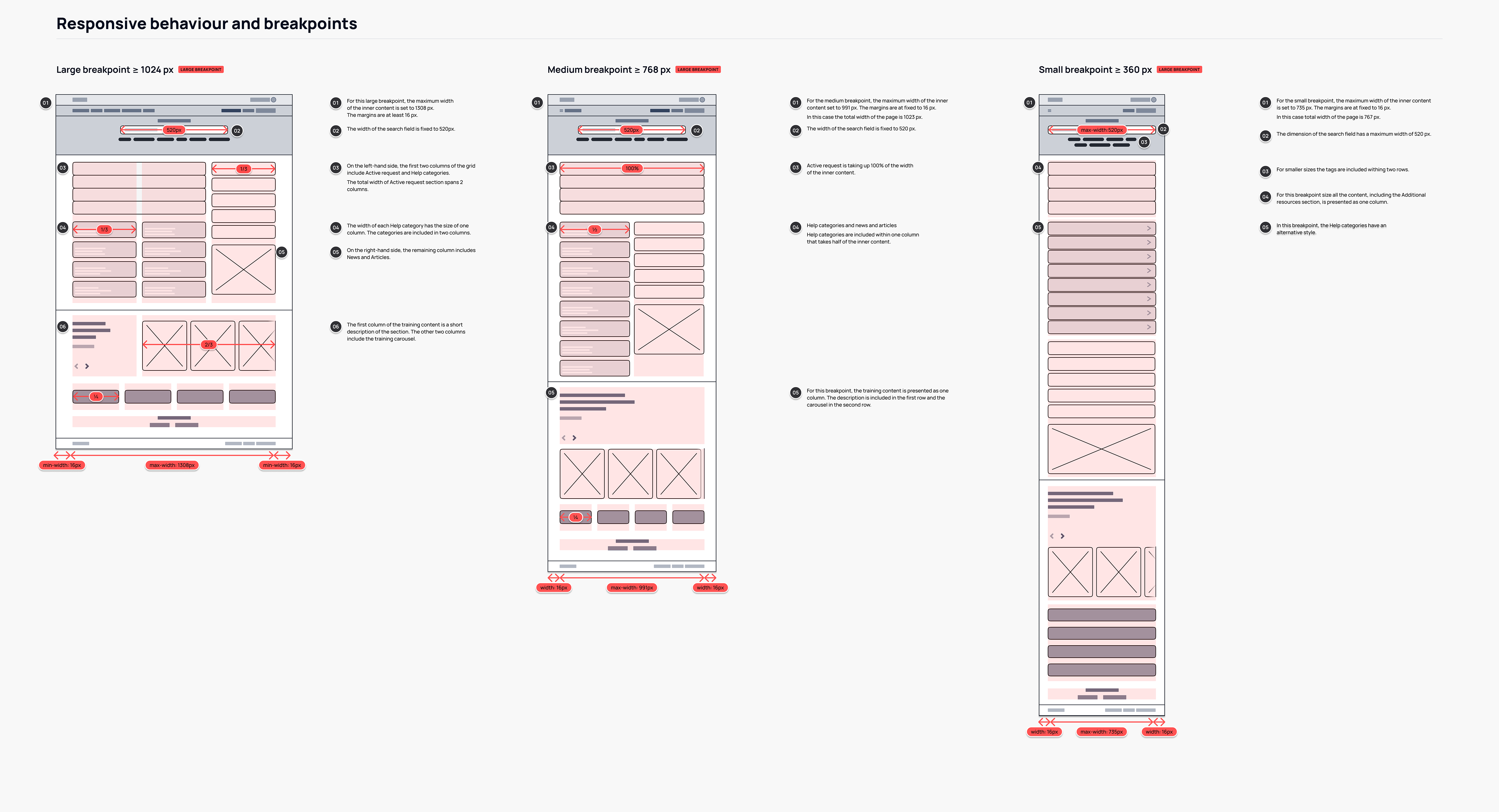
Design specifications for each breakpoint.
Modernised interface
In collaboration with the Visual Design team, we introduced a refreshed visual language that improved clarity and usability while aligning with customer expectations.
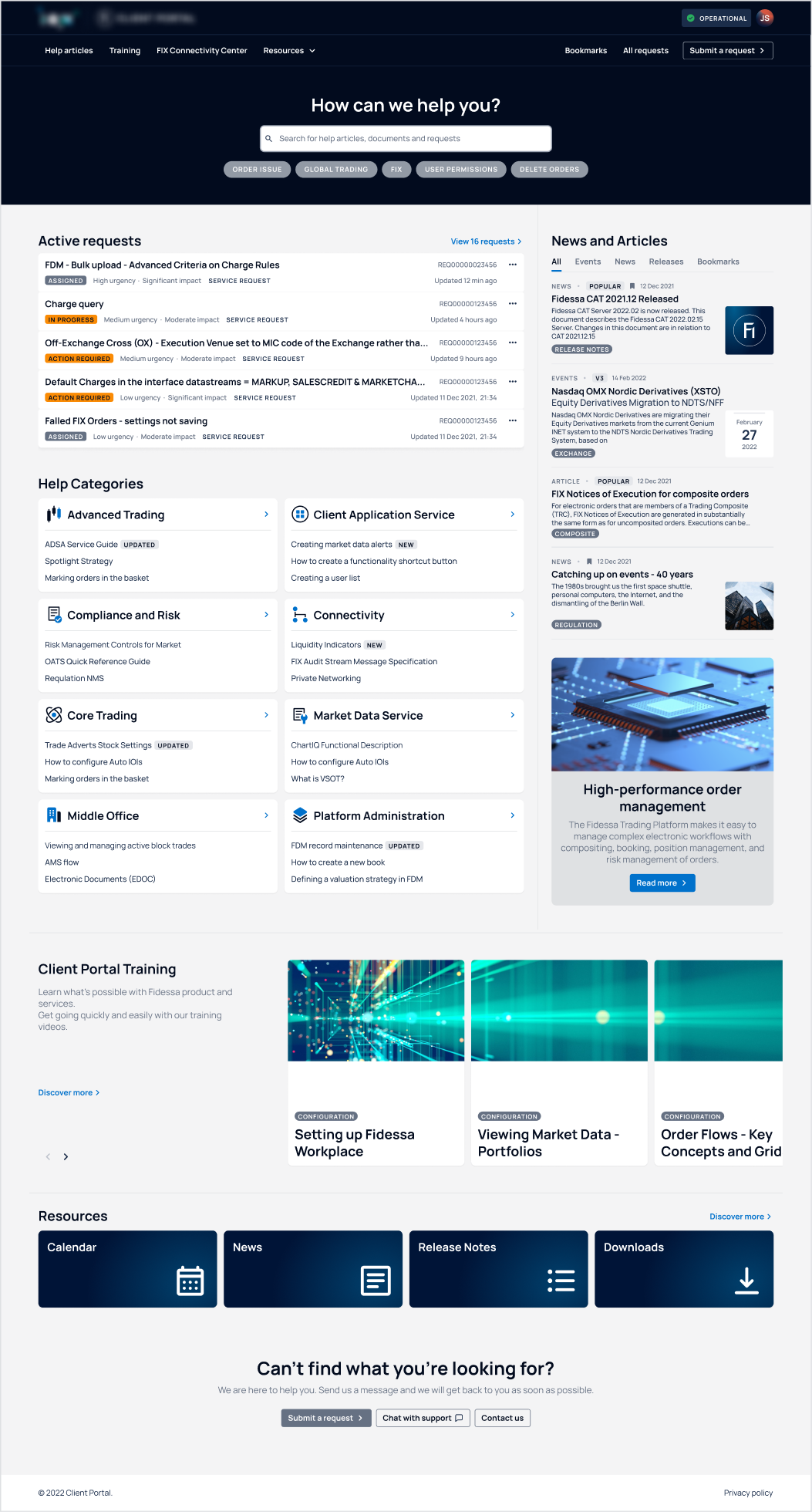
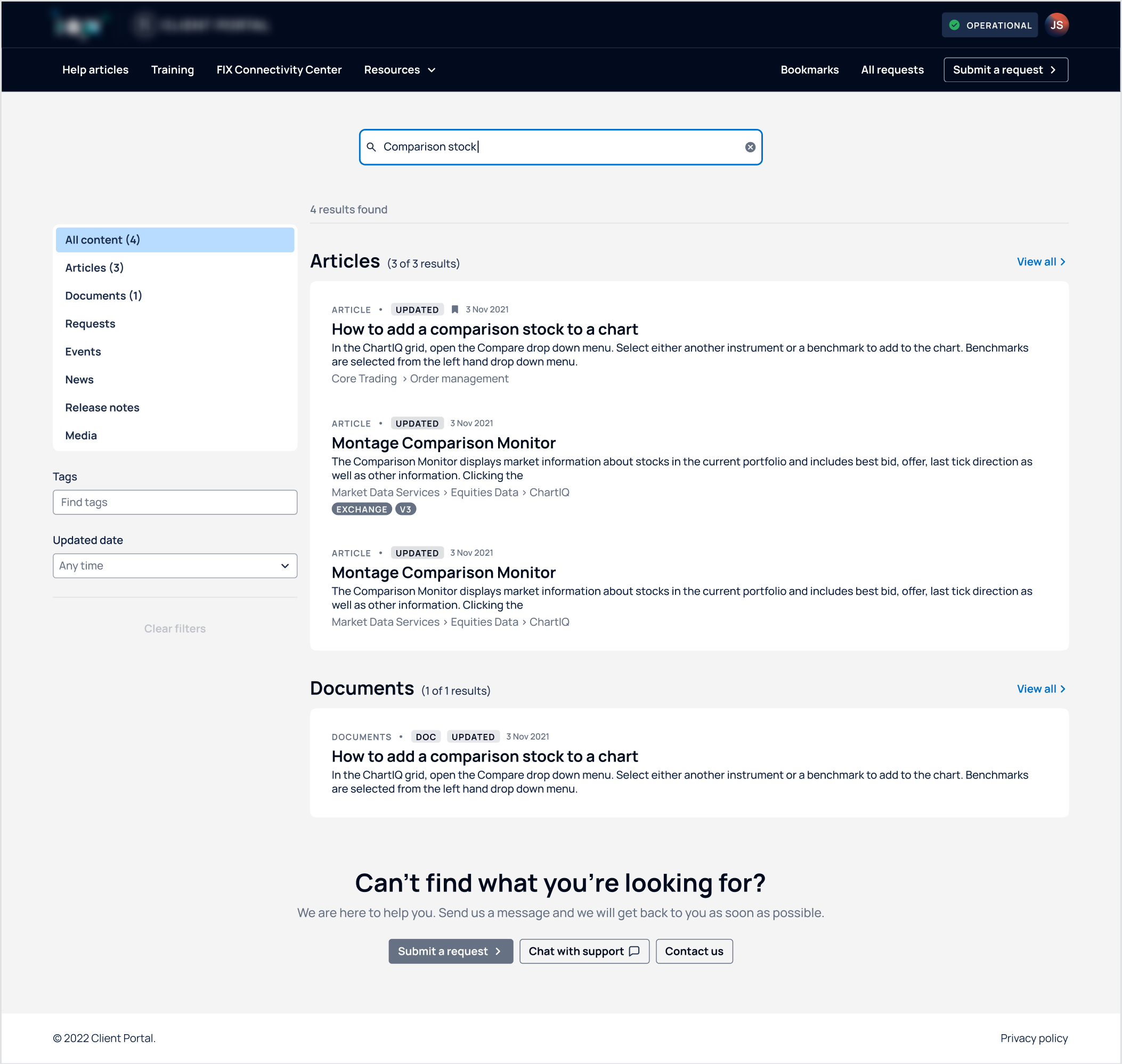
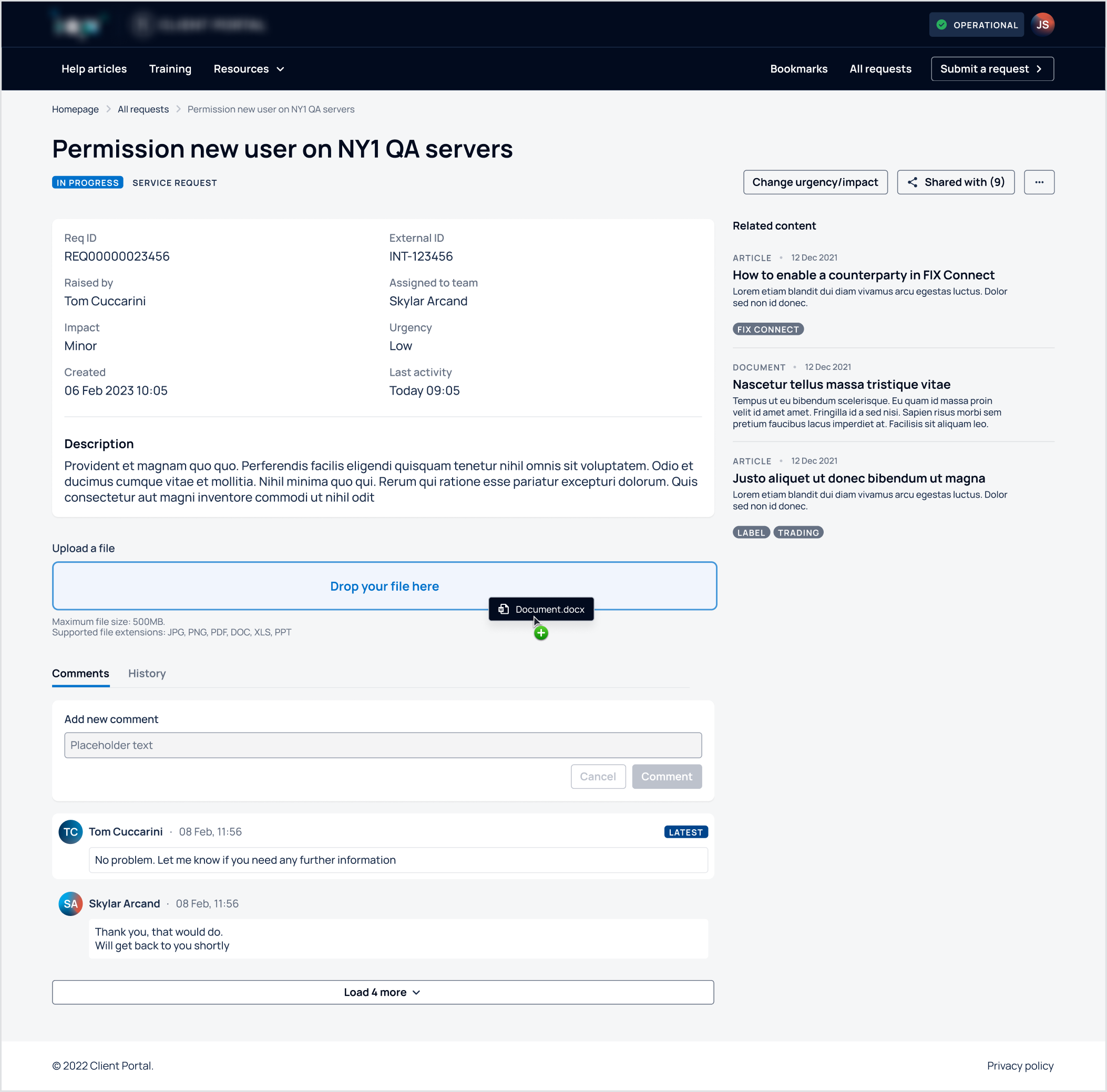
Redesigned Support portal home, search and request pages.
Outcomes
Six months after the project began, the first phase of the redesign was released to customers. Additional workflows and pages were subsequently redesigned using the same research-driven approach.
The redesign successfully addressed the key issues identified during research:
- Portal bounce rates decreased.
- More customers engaged with self-service support.
- Support requests submitted through the portal increased relative to email.
- Better structured requests improved the efficiency of support workflows.
The redesign helped reposition the portal as a more effective self-service channel, reducing reliance on other support channels and improving the experience for both customers and support teams.